


Remote closing circuit breaker commands need stricter controls than remote opening. Opening normally removes power from a load. Closing can energize conductors, restart equipment, or expose a worker to an unexpected operating condition.
Therefore, the project should not use one generic ON/OFF permission. It should define who may open, who may close, which states block closing, and how the result is confirmed.
Why Remote Closing Circuit Breaker Safety Is Different
A remote opening command is often part of load shedding, emergency control, fault isolation, or energy management. Although the action still needs authorization, it usually moves the circuit toward a deenergized state.
A closing command moves the system in the opposite direction. It may start a motor, heater, charger, pump, fan, conveyor, or other load. It may also re-energize a circuit that someone believed was isolated.
| Control Point | Remote Opening | Remote Closing |
|---|---|---|
| Main effect | Removes supply from load | Energizes load and conductors |
| Typical permission | Operator, automation, emergency logic | Restricted authorized role and interlocks |
| State checks | Current position and command priority | Trip source, local mode, lock, voltage, fault status |
| Failure response | Alarm if circuit remains closed | Stop, alarm, and block repeated attempts |
| Maintenance | Does not prove isolation | Must be inhibited by local lockout |
Check Permission Before Condition
First, determine whether the user or automation has authority to close that circuit. Role-based permissions should separate viewing, opening, closing, changing settings, and clearing lockout.
Next, check whether the command conflicts with a higher-priority state. A local maintenance lock, fire signal, emergency stop, or protection lockout should override a normal remote command.
Finally, log the operator, time, circuit, previous state, reason, and final result. This audit trail supports incident review and helps prevent informal use of shared accounts.
Use Current Feedback and Interlocks
The software should show a recent device state. If communication is stale, it should not assume that the circuit remains in the last reported condition.
Typical closing interlocks may include:
- Local selector is in AUTO or REMOTE
- No padlock or maintenance state is active
- No protective or emergency lockout is active
- Supply voltage is within the permitted range
- Actuator and position-feedback circuits are healthy
- The last opening source allows restoration
- The maximum operation count has not been reached
The exact set depends on the load and product. A pump station, telecom feeder, EV charger, and industrial machine do not need identical logic.
Confirm the Result After Closing
A successful protocol response means the device received or accepted the command. It does not always mean the breaker reached the closed position.
Therefore, wait for position feedback and observe the post-close state. If the breaker trips again or the actuator times out, stop further commands and create a clear alarm. A remote system should not automatically repeat closing into an unknown fault.
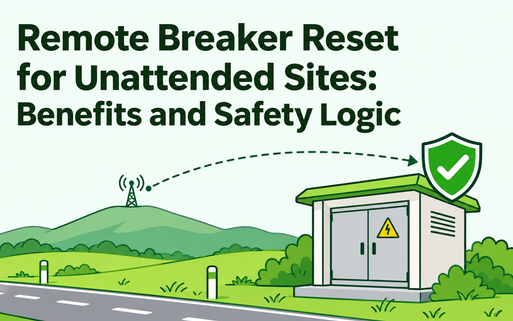
For unattended sites, the recovery procedure should define when an authorized operator can attempt a remote reset and when to dispatch a technician.
Keep Maintenance Isolation Independent
A software OFF command is not a safe isolation method by itself. The communication link can fail, another user can issue a command, or an automatic function can run.
The OSHA electrical work-practice rules state that control circuit devices and interlocks cannot be the sole means of deenergizing equipment for work. Use the applicable lockout/tagout, verification, and local isolation procedure.
Hardware Should Make the Safe State Visible
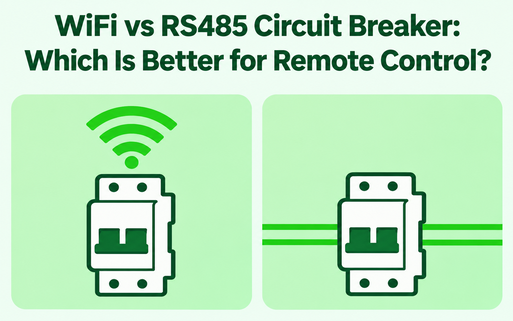
A suitable remote operating module should provide local mode selection and positive feedback. For example, the Matismart MT53R offers RS485, I/O, and WiFi versions, optional auxiliary status output, and a mechanical locking mode.
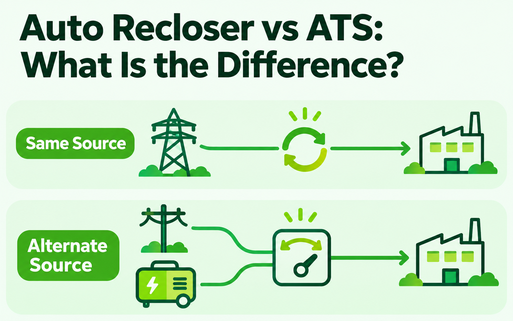
Where automatic reclosing is required, select a device with defined manual-trip recognition and permanent-fault lockout, such as the appropriate MT56 variant. Product capability does not remove the need for project-level authorization and interlocks.
Write a Closing Matrix for Each Load
A simple closing matrix can prevent many integration errors. List each circuit, the users who may close it, the local modes that permit control, the alarms that block the action, and the feedback that confirms success.
For example, a telecom rectifier feeder may allow remote recovery after a permitted event. A maintenance socket or machine feeder may require local confirmation. An emergency ventilation load may follow a separate fire-control sequence.
Also state what the system does when two commands arrive together. Emergency and protective commands should have a documented priority over normal operating requests.
This matrix becomes a shared reference for the panel builder, software engineer, operator, and maintenance team.
Frequently Asked Questions
Why is remote closing more restricted than remote opening?
Because closing energizes equipment and may start a process. It can also conflict with maintenance or emergency isolation.
Should a remote closing command require confirmation?
For higher-risk loads, a confirmation step or two-person approval may be appropriate. The requirement should follow the site risk assessment.
Can the BMS close a breaker after every trip?
No. The BMS needs the correct trip and lockout information. Continuing faults, manual opening, emergency trips, and maintenance states must block closing.
What if breaker feedback is unavailable?
Treat the state as unknown. Do not rely on the last command as proof of position, especially before closing or maintenance work.
Can a local lock block software commands?
It should. A correctly designed maintenance or padlock mode must have priority over remote and automatic closing.
Authorize Energization, Not Just a Command
Remote closing circuit breaker safety is about controlled energization. Combine user permission, live status, interlocks, local lockout, positive feedback, and a clear failed-operation response.
Explore Matismart remote-control and automatic-reclosing solutions and confirm which models provide local lockout and position feedback.