


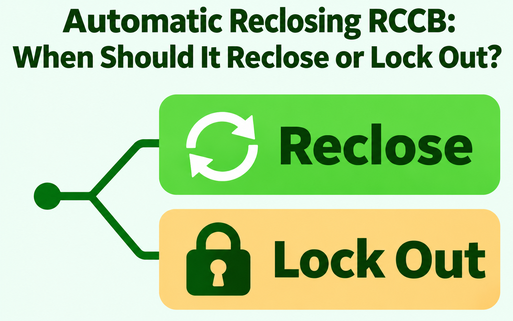
An automatic reclosing RCCB can restore power after a permitted temporary trip, but it must not treat every residual-current event as harmless. The controller needs clear rules for fault checking, delay, retry, manual opening, and lockout.
This distinction matters at telecom sites, outdoor systems, pumps, lighting, and other unattended loads. A nuisance trip may interrupt service. A real insulation fault, however, requires inspection rather than repeated closing.
What Is an Automatic Reclosing RCCB?
An RCCB detects residual current and opens when the measured condition reaches its operating threshold. It does not normally provide overload or short-circuit protection, so the circuit may also require a suitable MCB or another overcurrent device.
An automatic reclosing mechanism adds controlled operation after the RCCB opens. Depending on the product, it may use:
- Trip and position feedback
- Insulation or leakage testing
- A waiting period before restoration
- A limited number of attempts
- Auto, manual, and lock modes
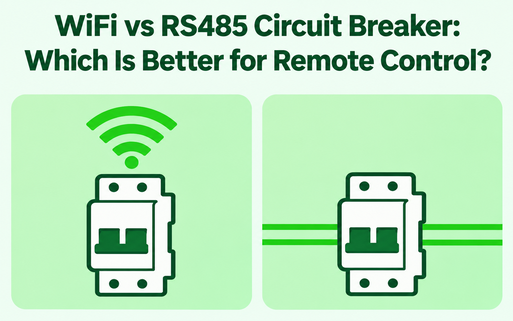
- RS485, I/O, or WiFi control
- Alarm and lockout status
IEC 63024 specifies requirements for automatic reclosing devices used with circuit breakers, RCCBs, and RCBOs for household and similar uses within its stated voltage and application scope.
When May the RCCB Reclose?
The exact permission depends on the certified product and site design. In general, the controller should first confirm that automatic mode is active, no maintenance lock is present, the operating mechanism is healthy, and the event is eligible for recovery.
| Condition | Expected Logic | Reason |
|---|---|---|
| Temporary eligible trip and successful fault check | Wait, then make one controlled attempt | Restore continuity after recovery |
| Insulation remains below the permitted level | Inhibit closing | Fault is still present |
| RCCB trips again immediately | Lock out | Likely continuing fault |
| Manual opening | Remain open | Operator intent has priority |
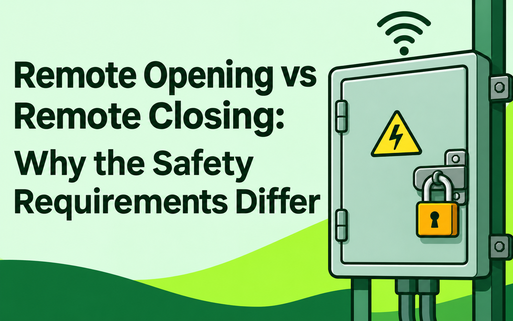
| Maintenance lock or emergency trip | Block automatic and remote closing | Prevent unexpected energization |
Insulation Check or Trial Reclosing?
Products use different fault-assessment methods. An insulation-monitoring recloser checks the circuit before closing. This approach can prevent a closing attempt while insulation remains below its permitted threshold.
Other devices use a controlled attempt and watch whether the RCCB trips again within a short defined time. If it does, the controller identifies a permanent condition and locks out.
Neither approach should be generalized to every product. Verify the sensing method, limitations, matched RCCB, connected load, and applicable standard. For example, the Matismart MT53SD provides insulation detection for a compatible RCCB. The MT56 series offers several fault-identification and communication variants.
Why a Retry Limit Is Essential
A retry limit controls risk and makes failure visible. Without it, a controller could repeatedly energize a faulty circuit.
After lockout, the system should report the event, prevent further automatic attempts, and require an authorized response. The technician should inspect the circuit and connected equipment before resetting the lockout.
This is also why an automatic reclosing RCCB should not be marketed as a solution for a breaker that keeps tripping. Repeated residual-current trips call for inspection of the circuit and connected equipment before power is restored.
Check the Complete Protection Arrangement
First, confirm system voltage, pole count, rated current, residual-current sensitivity, and RCCB type. Next, check short-circuit and overload protection. Then verify mechanical compatibility with the reclosing module.
Also review whether the load can restart automatically. Motors, compressors, heaters, and machinery may require a controlled process restart even when the electrical supply can be restored.
Finally, define who may change AUTO, MANUAL, or LOCK mode. Remote software should show the active mode and should not override a local maintenance lock.
Commission the RCCB and Recloser as One System
Commissioning should use the exact RCCB and automatic reclosing device installed in the panel. Confirm the pole arrangement, mechanical movement, auxiliary feedback, and supply voltage. Then verify each operating mode and indicator.
Test a normal local opening and confirm that the controller does not restore it. Next, use the manufacturer’s approved procedure to test an eligible event and the pre-close fault check. Finally, verify lockout after the defined failed attempt.
Record the delay, retry limit, fault thresholds, and reset method. If the device communicates with a BMS or SCADA system, compare every displayed state with the local indication.
This process matters because the RCCB, actuator, controller, wiring, and software create one operating chain. A correct individual component cannot compensate for an incorrect system sequence.
Frequently Asked Questions
Does an RCCB protect against overload?
Normally, no. An RCCB provides residual-current protection. Use a suitable MCB, fuse, RCBO, or other device for overcurrent protection as required.
Can an RCCB automatically switch back on?
Only when it is combined with a compatible automatic reclosing device or forms part of an integrated automatic-reset product.
Should an RCCB reclose after every leakage trip?
No. The system must check the trip condition and block restoration when a continuing fault, manual opening, emergency trip, or maintenance lock exists.
What happens when the RCCB trips again after reclosing?
A suitable design should identify the failed restoration, stop further attempts according to its logic, and enter a visible lockout state.
Is an automatic reclosing RCCB suitable for every circuit?
No. Evaluate the load, people who may access the circuit, restart behavior, fault risk, local rules, and product standard before use.
Balance Continuity with Fault Control
An automatic reclosing RCCB is valuable when a temporary trip should not create a long outage. Yet restoration is only acceptable after the system has confirmed that the event fits the permitted recovery logic.
Compare Matismart automatic reclosers and remote controllers, or provide the RCCB model, load, leakage requirement, and site operating sequence for a design-in review.