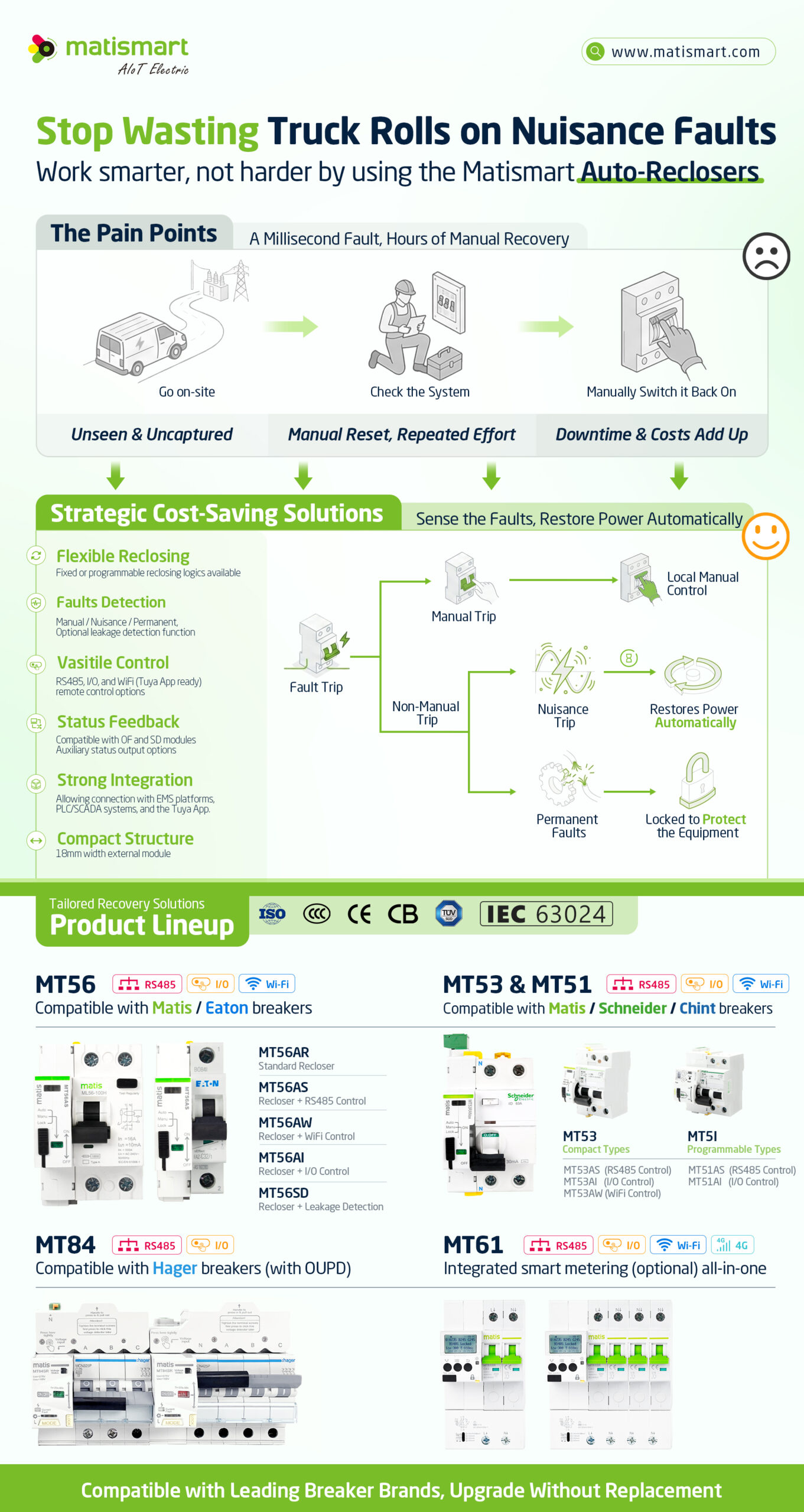



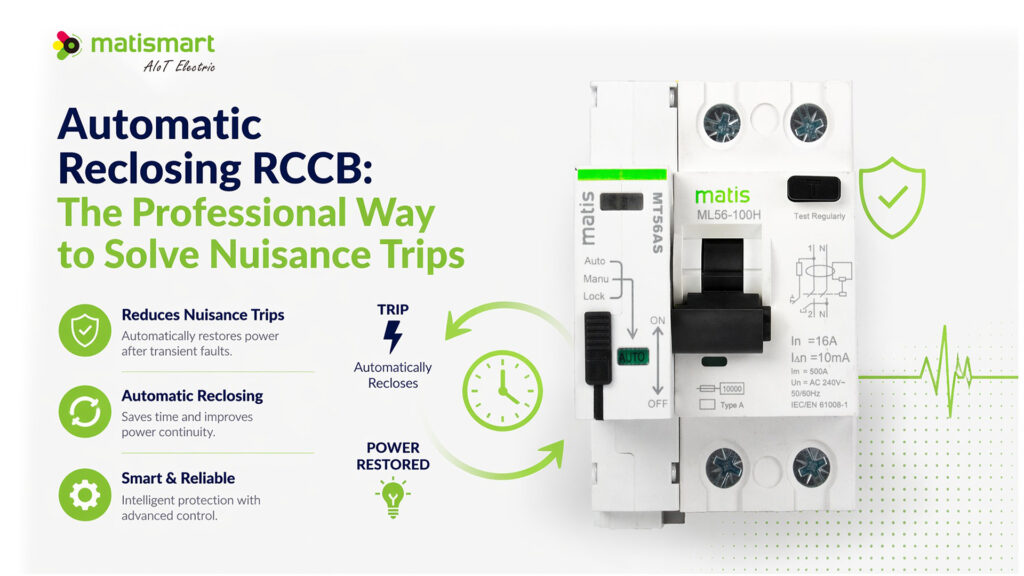
An automatic reclosing RCCB is the most effective tool I’ve found for stopping those annoying, unnecessary power drops at remote sites. We’ve all dealt with it—a quick lightning strike or a bit of moisture trips the breaker, and suddenly everything is offline. In our industry, we call these "nuisance trips." They don't represent a real danger, yet without an automatic reclosing RCCB, you are forced to send a technician just to flip a switch.
How Does an Automatic Reclosing RCCB Work?
I like to think of the automatic reclosing RCCB as a safety switch with a built-in brain. When it detects a leakage, it trips instantly to protect your equipment. But here is the smart part: instead of staying off, it waits and then performs a safety check.
If the fault was just a temporary glitch, the device closes the circuit and restores power. However, if the leak is real and dangerous, it is smart enough to stay open. This "test-before-reclose" logic is what makes it so much better than a basic breaker.
Why Power Reliability Matters for Your ROI
In my years working with telecom site maintenance teams, I’ve seen how much one simple trip can cost. It’s not just the technician’s time; it’s the lost data and the fuel for the truck.
By switching to it, you are automating your first line of defense. We’ve found that for most outdoor sites, these devices eliminate up to 80% of unnecessary service calls. That is a massive boost to your budget.
Best Places to Use the Automatic Reclosing RCCB
You don’t need these everywhere, but they are a lifesaver for these four areas:
- EV Charging Stations: Keeps customers happy by preventing simple power drops.
- Outdoor 5G Base Stations: Ensures the network stays up during storms.
- Agriculture & Irrigation: Keeps the pumps running in wet environments.
- Remote Data Centers: Essential when you can't have a person on-site 24/7.
Features You Should Look For
When you are buying, I suggest checking the "reclosing cycle." A good automatic reclosing RCCB should let you set the number of retry attempts and the delay time.
Also, make sure it supports remote communication like RS485. This way, if there is a real, permanent fault, you’ll get an alert in your office immediately.
Conclusion
An automatic reclosing RCCB is about building a more resilient power system. It protects your people and your business from unnecessary costs.
If you’re still resetting breakers by hand, it’s time for an upgrade. Reach out to our team, and we can help you find the right protection for your setup.