


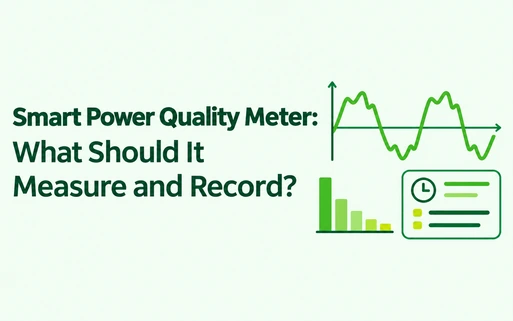
A smart power quality meter should do more than display voltage, current, power, and energy. It should help an engineer see when electrical conditions changed and provide enough information to investigate the cause.
However, the word smart does not define one measurement standard. One meter may only add RS485 communication. Another may record harmonics, voltage events, waveforms, demand, alarms, and historical data.
Therefore, selection should start with the electrical question that the project needs to answer.
What Is a Smart Power Quality Meter?
A smart power quality meter is a permanently installed electrical instrument with measurement, communication, and data-recording functions. Depending on the model, it may monitor:
- Voltage and current
- Active, reactive, and apparent power
- Power factor and frequency
- Active and reactive energy
- Demand and maximum demand
- Voltage and current unbalance
- Total harmonic distortion and individual harmonics
- Voltage dips, swells, and interruptions
- Minimum and maximum values
- Waveforms, alarms, and event records
In addition, communication allows a BMS, SCADA, EMS, PLC, or local server to collect the data. Local storage can protect important records when the network is unavailable.
Start with the Monitoring Purpose
First, define why the site needs power quality data. The answer determines the required measurement depth.
| Project Need | Useful Data | Typical Meter Level |
|---|---|---|
| Energy reporting | kWh, demand, power factor | Multifunction energy meter |
| Continuous electrical supervision | THD, harmonics, unbalance, trends | Power quality monitoring meter |
| Disturbance investigation | Dips, swells, event time, waveform | Advanced event-recording meter |
| Formal compliance assessment | Standardized and certified measurements | Verified Class A or Class S instrument |
The IEC 61000-4-30 standard defines measurement methods for power quality parameters and includes Class A and Class S methods. Therefore, a meter should not be described as Class A or Class S unless the required compliance has been verified.
Check Harmonics Beyond a Single THD Value
A THD value provides a quick indication of waveform distortion. However, it does not show which harmonic orders dominate.
For example, variable frequency drives, UPS systems, rectifiers, LED drivers, EV chargers, and inverters can create different harmonic patterns. Individual harmonic values help an engineer compare the measured result with the connected load.
Therefore, confirm the highest harmonic order, voltage and current coverage, update rate, and whether the software can trend the values.
Decide Whether You Need Event and Waveform Records
Next, decide whether the project only needs trends or also needs disturbance evidence. A trend can show that voltage dropped. An event record can show when it happened, how long it lasted, and which phases were affected.
Waveform records provide another level of detail. They can support investigation of distortion or abnormal conditions. However, waveform capability does not automatically make a meter a certified power quality analyzer.
Compare Communication and Data Storage
A smart power quality meter becomes more useful when its data reaches the system that manages the facility.
Common routes include:
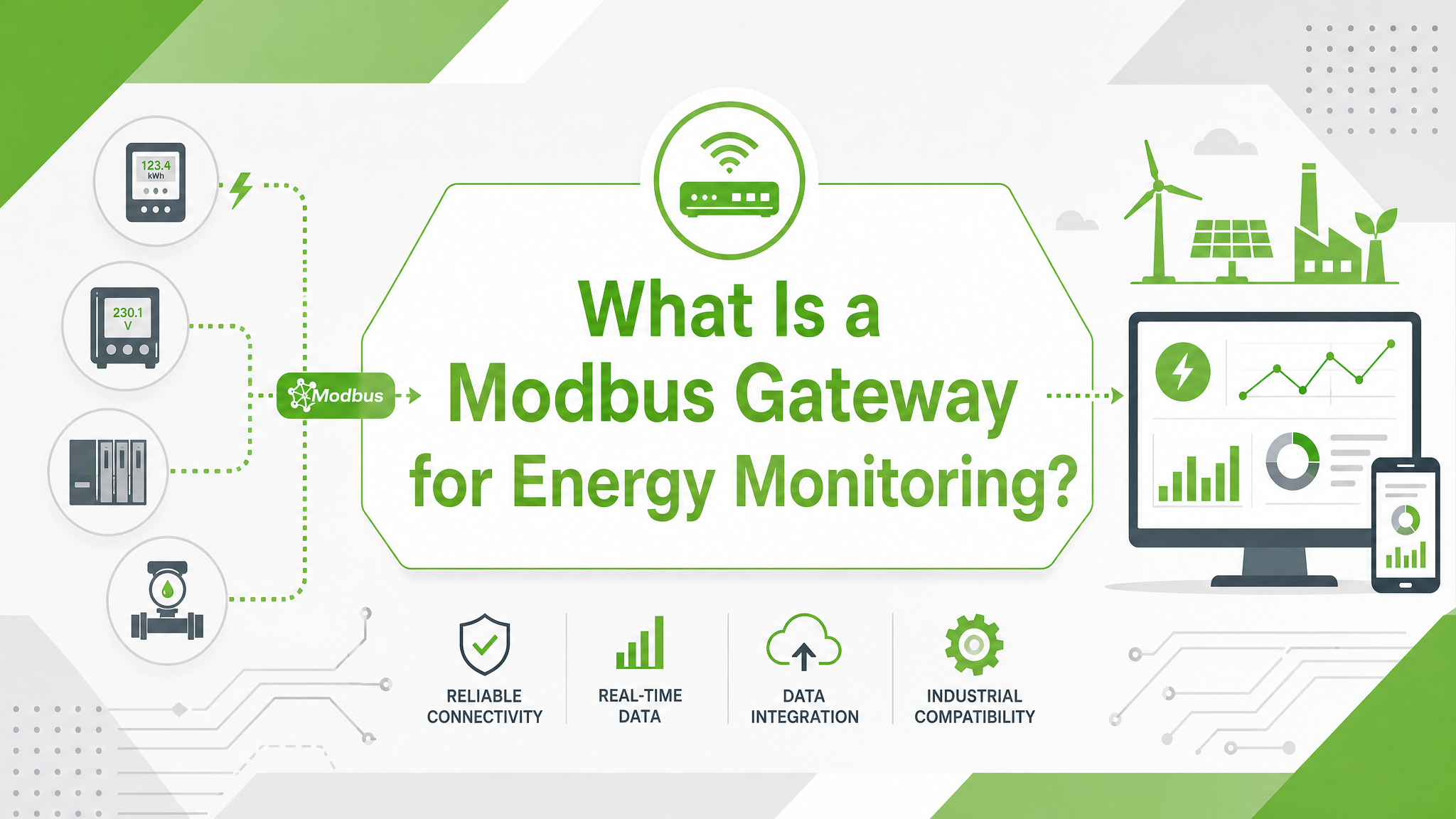
- RS485 Modbus RTU for BMS, PLC, and SCADA networks
- Ethernet Modbus TCP for IP-based systems
- Built-in web pages for local configuration and review
- Local memory for events and historical records
- USB or network export for engineering analysis
Match the Meter to the Installation Point
In practice, not every feeder needs the same device. Place deeper monitoring where the electrical or business risk is higher.
- Main incomers for overall supply conditions
- UPS input and output for critical power comparison
- Large motors and drives for load-related distortion
- PV, battery, and EV infrastructure for inverter-related conditions
- Production lines where disturbances affect product quality
- Data center feeders where events can affect availability
Meanwhile, general branch circuits may only need basic power and energy data. This tiered approach controls cost and reduces unnecessary data volume.
Matismart Options for Different Monitoring Depths
The Matismart PEM5000 supports continuous fixed-panel monitoring with harmonics up to the 50th order, waveform display, unbalance, vector diagrams, voltage event records, local storage, RS485, and Ethernet communication.
For projects that mainly need three-phase electrical data, demand, harmonics, and RS485 integration, the PEM3000 multifunction power meter provides a more compact monitoring level.
For several feeders in one panel, the MPM4000 multi-circuit meter can monitor up to four three-phase circuits or twelve single-phase circuits through one device.
For scalable circuits monitoring, the Enertrek V10+ E21/E31 can monitor 20 or more circuits with one V10 and zero downtime installation via RJ12 cables.
The correct choice depends on the required data, circuit quantity, sensor type, storage, communication, and system integration. These products support ongoing monitoring. Formal Class A or Class S compliance should be confirmed separately when a project requires it.
Frequently Asked Questions
What does a smart power quality meter measure?
Depending on the model, it may measure voltage, current, power, energy, demand, power factor, frequency, unbalance, harmonics, and voltage events. Some models also record waveforms and historical data.
Is a smart power quality meter the same as an energy meter?
No. An energy meter mainly records consumption. A power quality meter adds operating-condition data such as harmonics, unbalance, events, and sometimes waveforms.
Does harmonic monitoring mean the meter is IEC 61000-4-30 Class A?
No. Harmonic measurement alone does not prove Class A or Class S compliance. Confirm the product specification and applicable certificate.
Can a smart power quality meter connect to a BMS?
Yes, when the BMS supports the meter interface and protocol. The integrator also needs the correct register map, scaling, and communication settings.
Where should a power quality meter be installed?
Common locations include the main incomer, UPS input or output, critical feeders, large drives, renewable systems, EV charging, and sensitive production lines.
Select the Data Before the Device
A smart power quality meter should answer a defined engineering question. Start with the required decisions, then select the measurement depth, storage, sensor, and communication architecture.
Explore Matismart metering and power monitoring devices, or share the single-line diagram, voltage system, current range, monitoring purpose, and integration requirements with our team.