



Retrofit submetering helps an existing commercial building measure electricity by tenant, floor, department, or major equipment.
A main utility meter shows how much electricity enters a building. It does not explain which tenant, floor, department, or system used it.
Retrofit submetering adds measurement points inside an existing commercial building so the facility team can divide total consumption into useful operating categories.
The challenge is not only selecting meters. The project must decide what to measure, where the sensors can fit, how data will travel, and whether the results will be used for internal analysis or billing.
What Is Retrofit Submetering?
Submetering measures energy downstream from the main utility meter. In an existing building, it is normally added to installed distribution panels and feeders.
Monitoring points may be organized by:
- Tenant
- Floor
- Department
- HVAC system
- Lighting and socket loads
- Data room or server area
- EV charging
- PV generation or battery storage
- Major equipment
The measured data can support energy allocation, benchmarking, abnormal consumption detection, sustainability reporting, or an energy-management programme.
The ISO 50001 energy management framework emphasizes the use of measured data to understand energy performance and verify improvement.
Start with the business question for retrofit submetering
Before choosing hardware, ask what the customer wants to do with the data.
Examples include:
- Allocate electricity costs between tenants
- Compare similar floors or departments
- Identify after-hours consumption
- Measure HVAC energy separately from other loads
- Verify savings after an efficiency upgrade
- Track peak demand and available capacity
- Send energy information to an existing BMS
These objectives determine the required monitoring points, accuracy, data interval, reporting structure, and software functions.
Internal Allocation or Revenue Billing?
This distinction must be made early.
| Requirement | Internal Energy Allocation | Revenue Billing |
|---|---|---|
| Main purpose | Management and comparison | Charging a customer or tenant |
| Meter approval | Defined by project | May require local legal metrology approval |
| Data handling | Operational dashboard or report | Controlled billing records and tariff rules |
| Selection priority | Useful data and integration | Compliance, traceability, and approved accuracy |
A meter suitable for energy management is not automatically approved for revenue billing. Confirm the legal and contractual requirements in the project country.
Retrofit submetering—Survey the Existing Electrical Distribution
Obtain the latest single-line diagram, panel schedules, tenant allocation plan, and available energy bills. Then verify the documents against the actual installation.
The site survey should record:
- Incoming supplies and transformer arrangement
- Main and sub-distribution panels
- Which feeders serve each tenant or load group
- Single-phase and three-phase circuit quantities
- Expected and maximum current
- Cable or busbar dimensions
- Available DIN rail and cable space
- Existing meters and communication networks
- BMS, EMS, or cloud platform requirements
- Permitted installation windows
In older buildings, drawings may not reflect later modifications. Field verification prevents monitoring data from being assigned to the wrong tenant or equipment.
Retrofit submetering—Choose the Right Metering Architecture
Individual DIN Rail Meters
Individual meters are practical when only a few circuits need measurement and the panel has sufficient space. They provide a clear one-meter-to-one-circuit structure.
Multi-Circuit Monitoring
A multi-circuit system is more suitable when many feeders must be monitored in one panel. Shared voltage measurement and modular communication can reduce repeated wiring and panel space.
Split-Core CT Metering
Split-core CTs can be fitted around existing cables without passing the conductor through a closed core. They are useful when cable disconnection should be minimized.
Wireless or Cellular Communication
Wireless connectivity can help where new data cabling is difficult. However, signal coverage, cybersecurity, network ownership, operating cost, and long-term maintenance must be considered.
Retrofit submetering - Connect Submetering Data to the Existing System
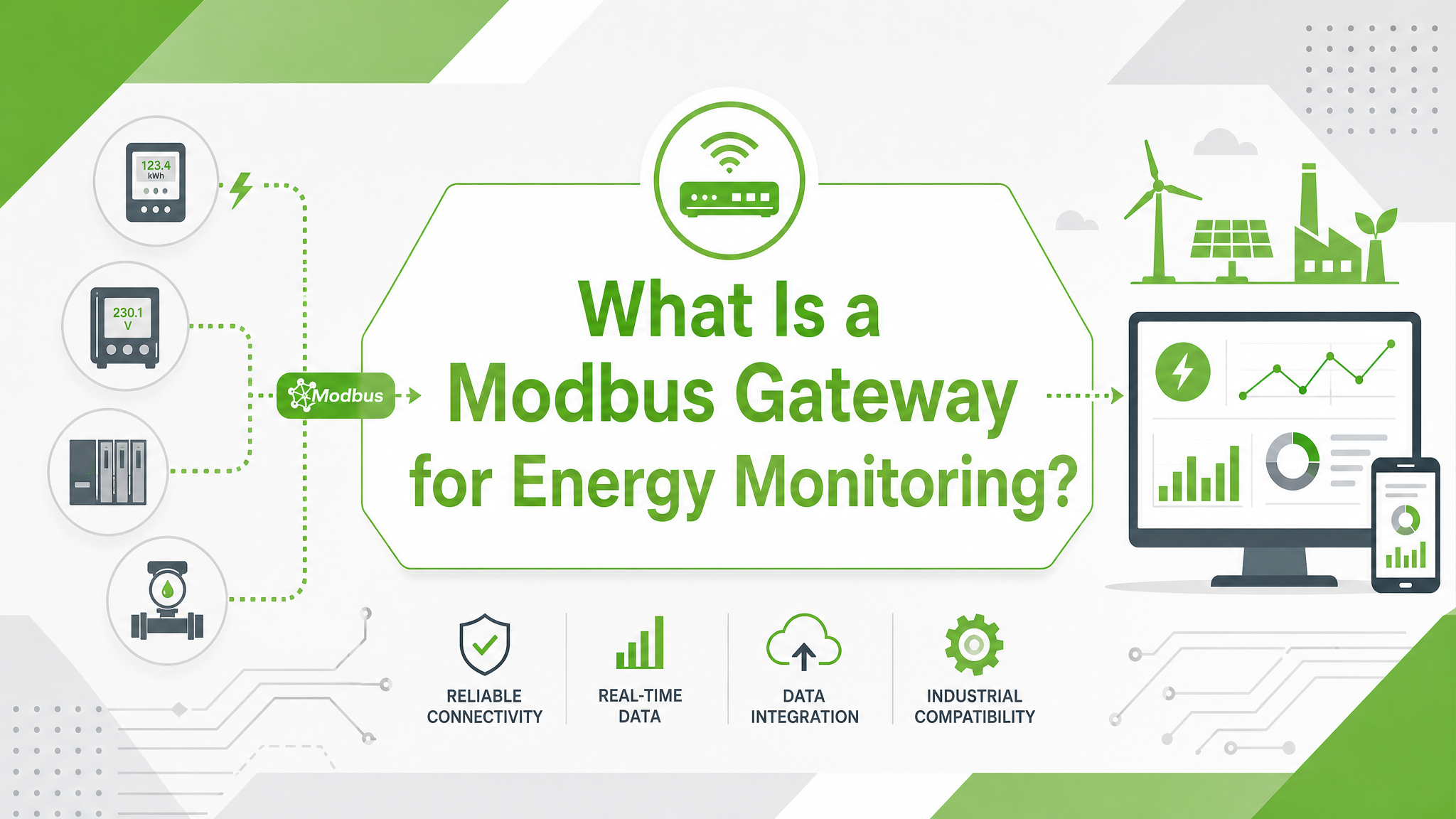
Many building projects use RS485 Modbus RTU at panel level. A gateway may aggregate the meters and provide Ethernet, Modbus TCP, MQTT, WiFi, or 4G upstream.
Before commissioning, define:
- Device addresses and communication settings
- Register map and scaling
- Energy import and export direction
- Polling interval
- Time synchronization
- Tenant and circuit naming
- Alarm thresholds
- Data retention and report format
For existing software integration, read BMS Integration for Legacy Electrical Panels.
Using Enertrek for Building Retrofit Submetering
The Enertrek multi-circuit monitoring system can combine different circuit types in one modular architecture.
Compact M Series modules support smaller outgoing circuits. E Series modules extend monitoring to higher-current feeders with split-core CTs or Rogowski coils. The G30 gateway can consolidate data and connect to local or remote platforms.
This makes the system relevant where one building contains a mixture of tenant distribution, HVAC feeders, critical equipment, and general branch circuits.
Matismart also offers individual energy meters when a simpler one-circuit design is more appropriate. The final selection should follow the number of monitoring points, available space, accuracy, and communication requirements.
Common Retrofit Submetering Mistakes
- Installing meters before confirming how tenants are actually supplied
- Using one main meter and expecting circuit-level answers
- Ignoring billing certification requirements
- Selecting CT ratios from breaker rating instead of real load
- Forgetting to plan voltage measurement
- Adding hardware without confirming BMS compatibility
- Using unclear circuit names that make reports difficult to understand
- Collecting data without defining who will review and act on it
Frequently Asked Questions
Can submetering be added without replacing the main switchboard?
Yes. Meters and sensors can often be added to existing panels, subject to available space, safe installation access, and the condition of the existing equipment.
Does every tenant need a separate meter?
Not always. It depends on how the electrical distribution is arranged. One tenant may have several feeders, or one feeder may supply shared loads that need separate allocation rules.
Can retrofit submeters connect to an existing BMS?
Yes, if the communication protocol and register map are compatible. A gateway may be needed when field devices and the BMS use different network interfaces or protocols.
Design the Data Structure Before Installing Hardware
A successful retrofit submetering project begins with the billing or management objective, not the meter model.
Define the reporting structure, verify the actual electrical distribution, select suitable monitoring points, and confirm how the information will reach the people who need it.
Share the building single-line diagram, tenant arrangement, panel photos, circuit list, and BMS requirements with Matismart. We can help evaluate a suitable combination of individual meters, multi-circuit monitoring, sensors, and gateway hardware.