


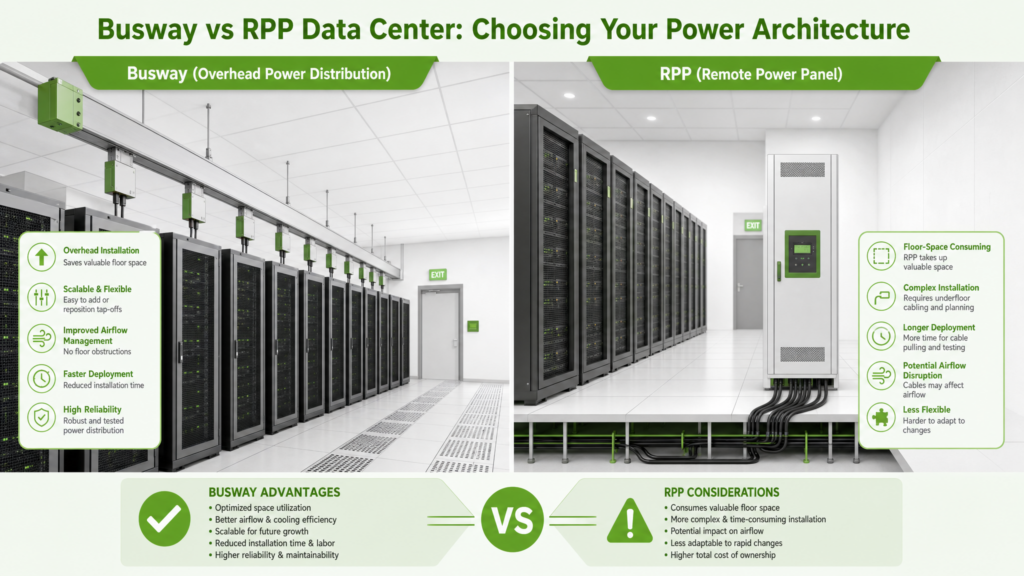
When you design the electrical layout for a modern server room, deciding between busway vs. RPP data center architectures is a critical first step. Traditional Remote Power Panels (RPPs) use heavy cables and take up valuable floor space that could otherwise hold server racks. On the other hand, overhead track busway systems run power directly above the rows, making the whitespace much cleaner. However, this shift from floor cabinets to overhead tracks changes how engineers must handle multi-circuit power monitoring.
Space Constraints: Busway vs RPP Data Center Layouts
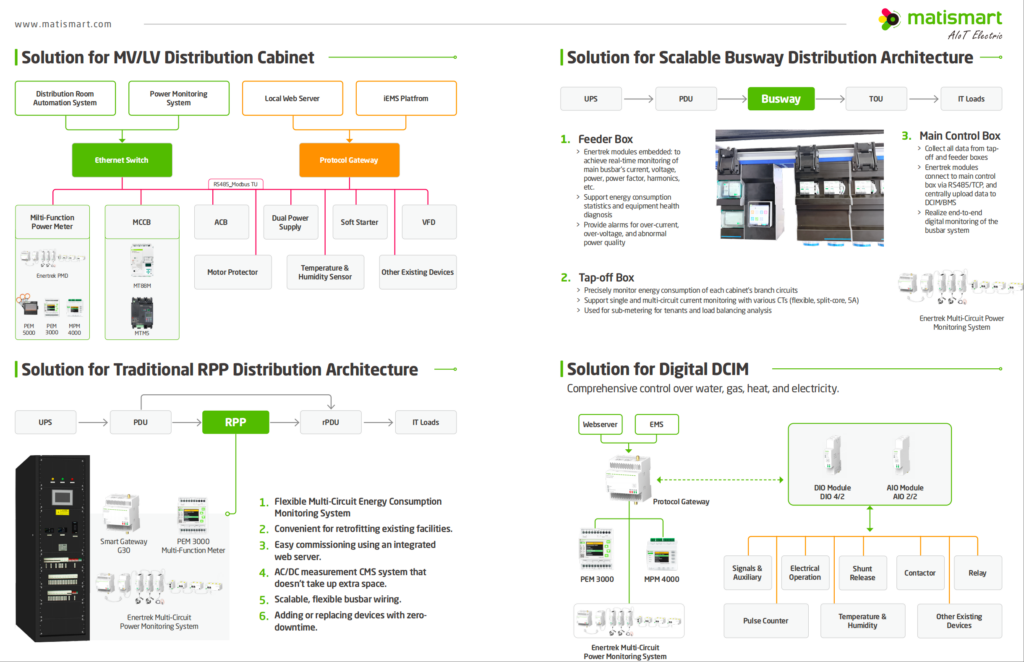
First, let us look at the structural differences. An RPP is a large, standalone cabinet. It has plenty of internal space to house traditional, bulky multi-circuit meters. Therefore, installing CTs and running wires inside an RPP is relatively straightforward.
However, when you choose an overhead track busway system, your power distribution happens inside tiny plug-in boxes. These are known as tap-off boxes or top boxes. These boxes have extremely tight space limitations. Consequently, trying to fit a standard full-sized power meter into a tap-off box is a nightmare for panel builders. To solve this, the industry has moved toward modular, rail-mounted devices that stack together like Lego bricks, saving precious millimeters.
Flexibility and Downtime: Busway vs RPP Data Center Scalability
Second, flexibility is where the debate of busway vs. RPP data center layouts gets interesting. If a tenant adds more servers to a rack under an RPP setup, you often have to run new cables all the way back to the panel. This can sometimes require scheduled maintenance windows.
In contrast, a track busway allows you to simply plug in a new tap-off box right above the rack. But here is the catch: your power monitoring system must be just as flexible. If you need to monitor 3 circuits today and 6 circuits tomorrow, you cannot afford to power down the entire busbar.
If you are also managing remote telecom site maintenance projects, you already know how costly unexpected site visits can be.
Therefore, data center engineering teams prefer distributed multi-circuit systems. They let you add measurement sub-modules without interrupting the live IT loads below.
Protocol Integration: Connecting to Your DCIM Platform
Third, no matter which architecture you select, data collection is your ultimate goal. Whether the meter sits inside a traditional RPP or an overhead tap-off box, it must communicate seamlessly.
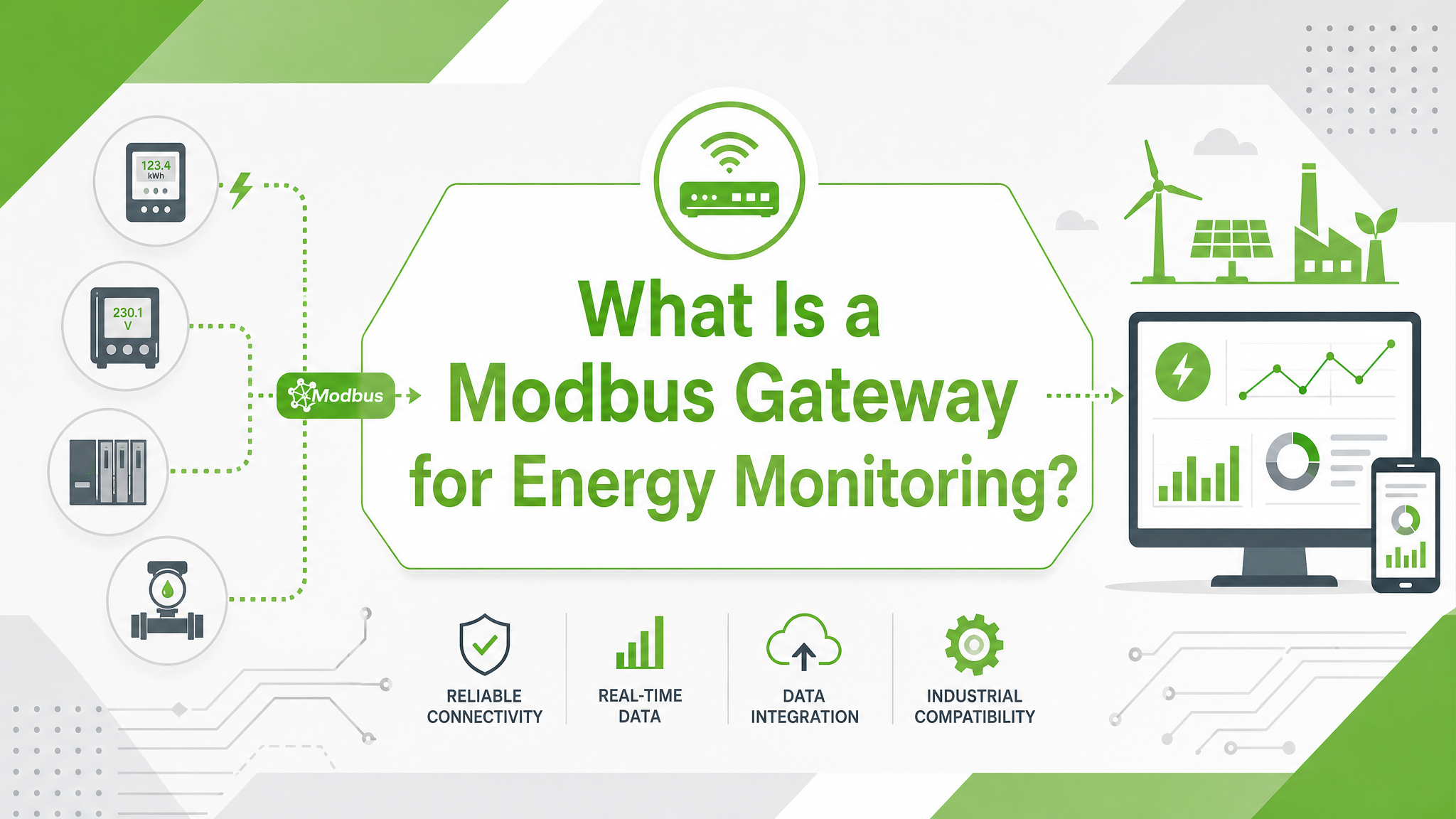
Most data centers use standard Modbus protocols to bridge the gap between physical meters and the central DCIM software. A smart control box at the end of the busway row typically aggregates data from all the individual tap-off boxes. Then, it uploads the metrics to your upstream platform via a single Ethernet link.
This clean telemetry setup works perfectly alongside your facility's electric smart meter grid to provide a complete view of your building's energy footprint.
This unified data structure prevents network congestion in your management system.
Busway vs RPP Data Center FAQ
Q1: Why are data centers moving away from RPPs to busway systems?
A1: Data centers prefer busway systems because they eliminate bulky floor-standing cabinets. This saves whitespace for more revenue-generating server racks. Additionally, busways offer easier scalability since you can add or move tap-off boxes as server loads change.
Q2: How do you handle power monitoring inside a compact tap-off box?
A2: Due to tight space constraints, you should use a modular, multi-circuit power monitoring system. These systems split the display, communication, and measurement into separate small modules that fit onto standard DIN rails.
Q3: Can I add new monitoring circuits to a live data center busway?
A3: Yes, but only if your monitoring hardware supports hot-swappable, split-core, or flexible current transformers (CTs) and plug-and-play measurement modules. This hardware allows you to safely expand monitoring capabilities with zero downtime.
Conclusion
Choosing between busway vs. RPP data center layouts depends entirely on your density goals and budget. RPPs offer a traditional, spacious environment for power management. However, track busways provide the modular flexibility that modern, high-density AI and cloud facilities require.
If you are currently designing a tap-off box or retrofitting an older facility, managing your space and telemetry data is vital. You can contact our engineering team at Matismart today to review our Enertrek multi-circuit monitoring system, which is designed specifically to fit into these tight electrical enclosures.